

School Refusal Therapy in Calgary for Children Ages 4–17
Your child isn't refusing school to be difficult. They're telling you something is too hard.
The meltdowns every morning. The stomach aches that only happen on school days. The tears, the pleading, the complete shutdown. School refusal can be a distressing thing for a family to go through, and it is one of the most treatable, with the right support.
What is school refusal?
School refusal isn't truancy. A child who is refusing to go to school isn't skipping class to hang out with friends or because they don't care about education. School refusal is a pattern of significant distress around attending school that is driven by anxiety, fear, or emotional overwhelm and that results in a child being unable or unwilling to attend.
It affects children of all ages and at all school levels. It often starts gradually - a few mornings of stomachaches, some tears at drop-off - and escalates over days or weeks until school attendance becomes a daily battle or stops entirely.
Left unaddressed, school refusal tends to get worse, not better. The longer a child avoids school, the more anxiety builds around the idea of returning, and the harder it becomes. Early intervention is almost always more effective than waiting to see if things improve on their own.
Does any of this sound like your mornings?
School refusal looks different in every child. Here are the patterns parents most commonly describe when they reach out to us:
Physical symptoms before school
Stomachaches, headaches, nausea, or complaints of feeling unwell that occur every school morning but seem to resolve on weekends or holidays.
Escalating anxiety the night before
Sunday evenings become particularly hard - your child starts dreading the next day, can't sleep, or becomes increasingly distressed as bedtime approaches.
Meltdowns at drop-off
Crying, clinging, begging not to go, or full explosive outbursts at the school gate - every morning, regardless of what the day before was like.
Calling to be picked up
Frequent calls from school saying your child is unwell, distressed, or asking to go home - even when there's no medical reason for it.
Flat refusal to leave the house
Getting dressed, in the car, or out the door becomes impossible - the child shuts down completely and no amount of reasoning, bribing, or consequences changes anything.
Fine at home, falls apart at school
A child who seems happy and engaged at home but becomes a completely different child the moment school is mentioned or approached.
Why is my child refusing school?
School refusal is almost always driven by anxiety, but the specific trigger varies from child to child. Understanding what's underneath the refusal is the first step to addressing it effectively.
Separation anxiety - For younger children, especially, the distress of being away from a parent can feel genuinely terrifying. School becomes associated with intense fear and distress.
Social anxiety - Peer interactions, being evaluated by others, or navigating the unpredictability of social situations can be overwhelming. School concentrates all of these stressors into one unavoidable environment.
Performance anxiety - Fear of getting things wrong, being called on in class, or not meeting expectations - a child anxious about achievement may find school a source of near-constant threat.
A specific triggering event - A falling out with a friend, bullying, a humiliating moment in class - sometimes school refusal starts with a specific incident the child can't get past.
Generalized anxiety - Some children experience the world as more threatening than it is - and school, with its demands and unpredictability, becomes the focal point of that anxiety.
Neurodevelopmental factors - Children with ADHD, autism, sensory processing difficulties, or learning disabilities may find the school environment particularly overwhelming.
Whatever is driving the refusal, the mechanism that keeps it going is the same: avoidance provides temporary relief, which reinforces the anxiety, which makes the next attempt harder.
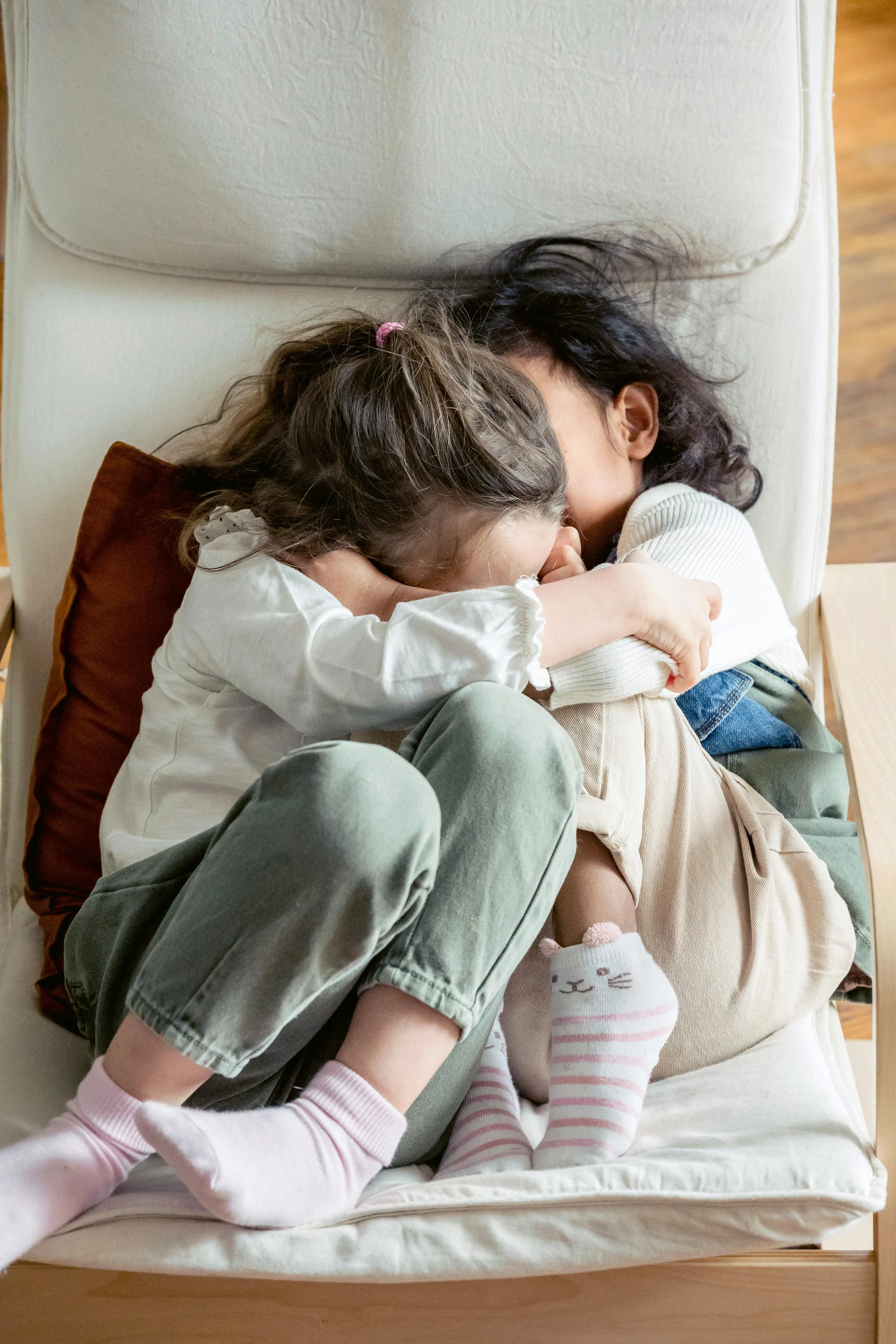
How Bluebird Psychology Helps With School Refusal
School refusal responds well to therapeutic support, particularly when that support is gentle, child-led, and addresses the underlying anxiety rather than focusing solely on getting the child back to school as quickly as possible. At Bluebird Psychology, our primary approach for school refusal is play therapy, supported by parent consultation throughout.
Play Therapy
Play Therapy is particularly well-suited to school refusal because it doesn't require a child to talk about or explain their fears directly. Instead, children express and process their anxiety through sand tray, art, and imaginative play, guided by a Registered Play Therapist in a safe, consistent space where they feel genuinely in control.
Over time, children develop the emotional regulation skills and coping strategies that allow them to tolerate the anxiety of school attendance, rather than being overwhelmed by it. The goal isn't to eliminate anxiety entirely. It's to build your child's capacity to function despite it.
Parent consultation runs alongside your child's sessions. We help you understand what's driving the refusal, how to respond in the mornings in ways that reduce rather than amplify anxiety, and how to work with the school to support a gradual, sustainable return.
You can read more about Play Therapy and meet our Registered Play Therapist here!
CBT-Based Child Counselling
For older children and teens, typically ages 8 and up , who are ready to engage with a more direct, talk-based approach, CBT-based child counselling can be an effective option for school refusal.
CBT for school refusal helps children and teens:
Identify the specific thoughts and beliefs driving their avoidance ("Something bad will happen if I go," "I can't cope without mum," "Everyone will notice if I struggle")
Challenge and reframe those thoughts with the support of a psychologist
Build a gradual exposure plan — working step by step back toward full attendance at a pace that feels manageable
Develop practical coping strategies for managing anxiety in the moment
CBT is particularly well suited to teens who can reflect on their own thinking and who respond better to a structured, goal-oriented approach than to play-based methods. It can also be combined with play therapy elements for children who benefit from both.
Why Early Intervention Matters
School refusal is one of the conditions where acting sooner rather than later makes a real difference to outcomes. Here's why:
Every day a child is out of school, the gap between them and their peers grows — academically, socially, and emotionally. What starts as a two-week absence can become a semester, then a year. The longer a child has been out, the harder the return.
The anxiety itself also intensifies with time. Avoidance is self-reinforcing, and the more a child avoids school, the more threatening it becomes in their mind. A child who has missed two weeks needs different support than one who has missed two days.
This isn't about pressure or blame. It's about being honest that if your child has been struggling with school attendance for more than a week or two, getting support now will make everything that follows easier.
If your child has been out of school for an extended period, please also speak with their school directly. Most Calgary schools have learning support teams who can help plan a gradual reintegration. Therapy and school support work best together.

What to Expect When You Reach Out
1. Free 15-minute phone consultation (Optional)
Tell us what's been happening and how long it's been going on, what the mornings look like, what you've already tried. We'll give you an honest recommendation and answer your questions.
2. Initial parent intake session
Before your child's first session, we meet with you privately to understand the full picture - school history, triggers, what the anxiety looks like at home, and what your goals are.
3. Child therapy sessions
Your child meets with their Registered Play Therapist or Psychologist. Sessions are 50 minutes in a warm, pressure-free space. We never push children to talk about school directly - the therapeutic work happens through play, at your child's pace.
4. Regular parent check-ins
We update you every few sessions on your child's progress and give you practical strategies for managing mornings, responding to distress, and working with the school. You're always in the loop.
Frequently Asked Questions
-
This is one of the most common questions we get, and the honest answer is: it depends. For some children, a firm but gentle insistence on attendance (with appropriate support in place) is the right approach. For others, forcing attendance before the underlying anxiety is addressed can make things significantly worse. The right approach depends on the severity of the refusal, what's driving it, and your child's individual profile.
-
There's no universal timeline - it depends on how long the refusal has been going on, what's driving it, and how the child responds to therapy. Some children make meaningful progress within 6–8 weeks. Others need longer, particularly if they've been out of school for an extended period. What we can tell you is that doing nothing reliably makes things worse and that early, consistent support reliably improves outcomes.
-
INo. This is a very common pattern with school refusal and anxiety generally. Children often experience genuine distress, specifically in the contexts they fear and feel genuinely fine in safe, familiar environments. The shift from fine at home to distressed at school is not manipulation. It's anxiety doing exactly what anxiety does.
-
Yes, keeping the school informed is important both practically and therapeutically. Most Calgary schools have learning support or student services teams who can help plan a modified re-entry.
-
We support children ages 4 to 17 with school refusal. For older children and teens, we may incorporate more direct anxiety management strategies alongside play therapy, depending on what fits best.
-
Many extended health plans cover sessions with a Registered Play Therapist under "psychological services." We recommend checking your plan directly. We provide detailed receipts after every session for reimbursement.
Have questions?
We’re here to help!
Email us: office@bluebirdpsychology.ca
Call us: (587) 288-6884Schedule a free 15-minute consultation with one of our psychologists here.
We are located at 277, 200 Rivercrest Dr. SE in Calgary, AB