What Is Play Therapy?
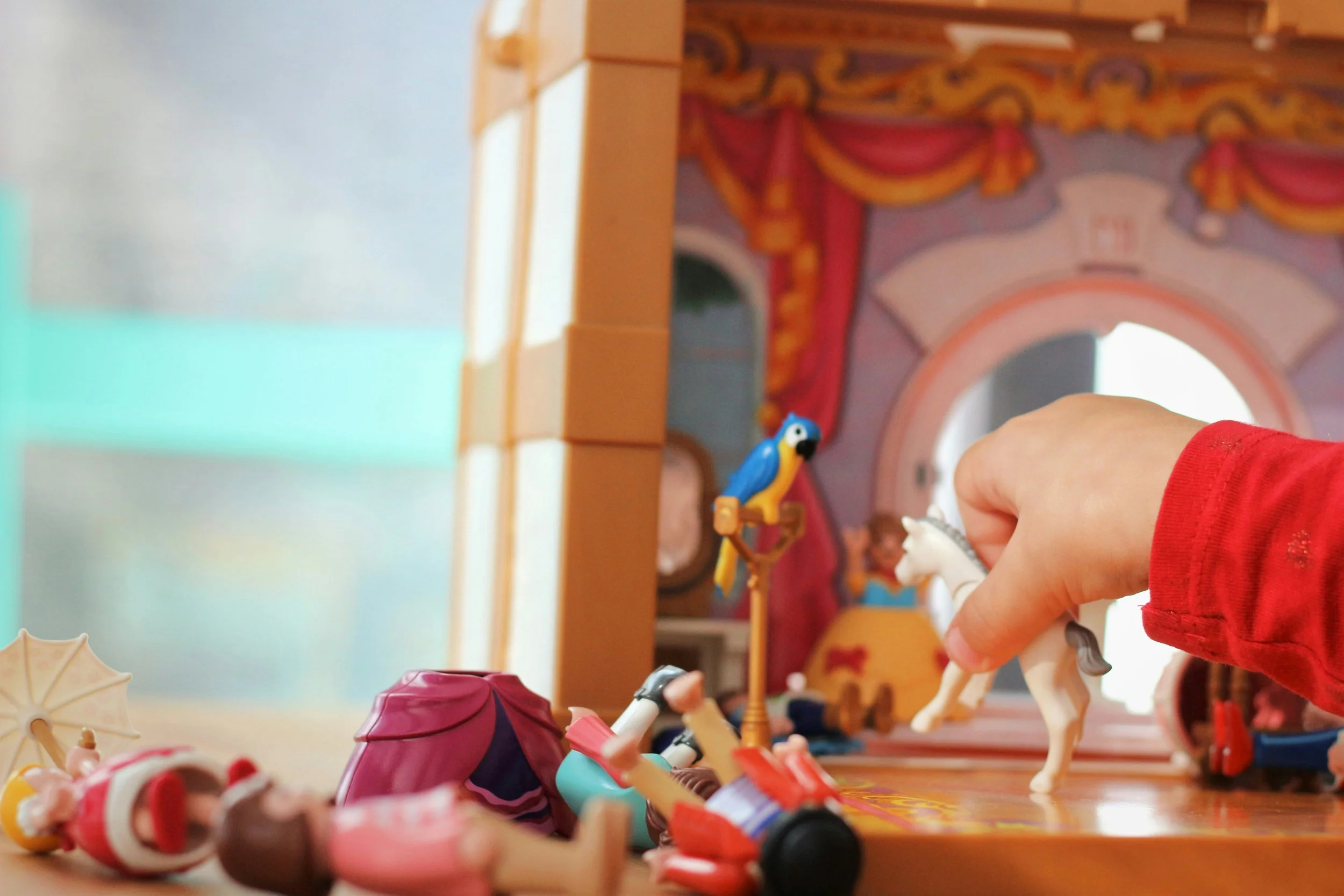
If you’ve ever watched a child get completely lost in play, like lining up toy animals, creating elaborate imaginary worlds, or acting out scenes with dolls, you’ve seen something deeply important unfolding. To adults, it can look simple or even random. But for children, play is how they think, communicate, and process life.
That’s the foundation of play therapy.
What Is Play Therapy?
Play therapy is a structured, evidence-based form of counselling designed specifically for children. Instead of expecting kids to sit down and talk through their feelings like adults do, therapists meet them in a space that feels natural - play!
Using toys, art, storytelling, and imagination, Registered Play Therapists help children express what they’re experiencing internally. This might include emotions they don’t understand, memories they can’t articulate, or stress they don’t even realize they’re carrying.
Organizations like the Association for Play Therapy have spent decades developing standards and training for therapists, ensuring that play therapy isn’t just casual playtime - it’s intentional, clinical work grounded in research and child development.
Why Play Works Better Than Talking (For Kids)
One of the biggest misconceptions about therapy is that it always involves talking. That assumption falls apart quickly when you think about young children.
Kids don’t naturally process their experiences through language. Their brains are still developing the ability to name emotions, connect cause and effect, and reflect on their inner world. So when something difficult happens, like a move, a divorce, or even everyday stress, they don’t sit down and explain it. Instead, they show it.
A child who feels out of control might repeatedly knock over towers. A child experiencing fear might create stories about danger or monsters. Another might go quiet, avoiding imaginative play altogether. These aren’t random behaviours, - they’re expressions.
Play therapy works because it respects this reality. Instead of forcing children into adult communication styles, it allows them to speak in their own language, while a Registered Play Therapist listens in a way most adults aren’t taught to.
A Quick Example from the American Association for Play Therapy (ATP)
How Play Therapy Actually Works
A play therapy room isn’t just a pile of random toys. It’s a carefully curated environment where each object serves a purpose.
You might see dolls, puppets, art supplies, miniature figures, sand trays, and games, but these tools are selected because they allow children to project their inner experiences outward. In other words, what’s happening inside the child begins to show up in how they play.
There are different approaches, but two broad styles are commonly used.
In child-centered play therapy, the child takes the lead. They choose what to play with, how to play, and what direction the session goes in. The therapist doesn’t interrupt or control the process. Instead, they observe, reflect, and occasionally name what they’re seeing in a gentle way. Over time, this builds a sense of safety and helps the child feel understood without pressure.
In more directive approaches, the therapist introduces specific activities or themes to help the child work through particular challenges. This might involve role-playing, storytelling prompts, or guided exercises designed to build coping skills or process a difficult event.
Both approaches are grounded in the same idea: when children feel safe and supported, they naturally move toward healing.
What Happens During a Session
A typical session has a rhythm, but it rarely feels rigid or clinical from the child’s perspective. In fact, to them, it often just feels like a space where they can finally be themselves without correction or expectation.
At the beginning, the child might take a few minutes to settle in, exploring the room or returning to familiar toys. As the session unfolds, patterns begin to emerge. A child might repeat the same story, recreate similar scenarios, or gravitate toward certain types of play.
To an untrained eye, it can look like repetition. To a therapist, it’s information.
The therapist pays close attention - not just to what the child plays, but how they play. Are they in control or chaotic? Are they expressing fear, anger, or curiosity? Are they avoiding something?
Rather than analyzing out loud or interrupting, the therapist might reflect gently: naming emotions, validating experiences, or simply being present. Over time, this helps the child build awareness and begin to shift their patterns in subtle but meaningful ways.
The session ends in a predictable, consistent way, which is more important than it might seem. That structure helps children feel safe and learn that even emotional experiences have a beginning, middle, and end.
What Issues Can Play Therapy Help With?
Play therapy isn’t limited to one type of problem. It’s used across a wide range of emotional, behavioural, and developmental challenges.
Children dealing with anxiety often use play to express fears they can’t verbalize. Those who have experienced trauma may reenact events in symbolic ways, gradually gaining a sense of control over something that once felt overwhelming. Kids navigating big life changes, such as divorce, loss, or relocation, often use play to process confusion and uncertainty.
It’s also helpful for children who struggle with emotional regulation. Instead of being told to “calm down” or “use your words,” they’re given a space where those skills can develop naturally, at their own pace.
Even social difficulties can be addressed through play, as children practice interaction, boundaries, and communication in a low-pressure environment.
What the Research Says
There’s a growing body of research supporting the effectiveness of play therapy, much of it compiled and promoted by the Association for Play Therapy.
Studies have shown that children who participate in play therapy often experience improvements in emotional regulation, reduced behavioral issues, and stronger relationships with caregivers. Perhaps just as importantly, parents frequently report feeling more connected to their child and better equipped to support them at home.
It’s not an overnight fix, and it doesn’t work in a straight line. But over time, the changes tend to be noticeable and lasting.
Another Helpful Explanation
How to Know If Your Child Might Benefit
Many parents hesitate before seeking help, often wondering if their child’s behaviour is “serious enough.” The truth is, play therapy isn’t just for extreme situations.
If your child seems overwhelmed more often than not, has trouble expressing emotions, or has gone through a significant life change, it may be worth considering. Sometimes the signs are subtle, such as withdrawal, increased irritability, or changes in sleep and play patterns.
You don’t need a clear diagnosis to seek support. Often, the earlier a child has a space to process what they’re experiencing, the easier it is for them to move through it.
What Parents Should Expect
One of the more surprising aspects of play therapy for parents is the level of privacy involved. Therapists don’t typically provide a detailed play-by-play of each session, and that can feel uncomfortable at first.
But there’s a reason for it.
For therapy to work, the child needs to feel that the space truly belongs to them. If they worry that everything will be reported back, they may hold back or try to “perform” instead of expressing themselves honestly.
That said, parents aren’t left out of the process. Therapists provide regular updates, discuss progress, and offer practical ways to support the child at home. It becomes a collaborative relationship, even if the sessions themselves remain private.
Our Final Thoughts
Play therapy asks adults to rethink something we often take for granted. We tend to see play as a break from real life, something children do when they’re not learning or working.
But for children, play is the work.
It’s how they make sense of the world, test boundaries, express emotions, and ultimately heal. Play therapy simply creates the conditions where that natural process can happen more safely, more intentionally, and with the support they need.
And sometimes, what looks like “just playing” is actually a child doing some of the most important emotional work of their life!
To find out more about Play Therapy and how Bluebird Psychology can help, click here!